VIETNAM 4th International Congress on Research in Civil, Architectural & Environmental Engineering: RCAE2-27




+91 9781001229, +66 62 601 8051, +351 920 619 073
+91 9781001229, +66 62 601 8051, +351 920 619 073
Full Articles/ Reviews/ Shorts Papers/ Abstracts are welcomed in the following research fields:
Structural Analysis & Dynamics: Load calculations, stress and strain distribution, seismic response, vibration analysis, and wind engineering.
Materials Science & Mechanics: Concrete technology, structural steel design, timber and masonry structures, composite materials, and material degradation.
Infrastructure Design: Bridges, tall buildings, dams, retaining structures, and spatial truss systems.
Soil Mechanics: Soil classification, shear strength, permeability, consolidation, and slope stability.
Foundation Engineering: Shallow and deep foundations, piled foundations, retaining walls, and earth-retaining structures.
Geoenvironmental & Ground Improvement: Soil remediation, landfill liner design, soil stabilization, and tunneling mechanics.
Building Enclosures & Physics: Thermal insulation, moisture control, daylighting, acoustic performance, and facade engineering.
Building Energy Systems: HVAC design, renewable energy integration, energy modeling, passive heating and cooling, and indoor environmental quality.
Architectural Systems Integration: Building Information Modeling (BIM), smart building automation, structural-architectural synthesis, and life-safety systems.
Pavement & Materials Engineering: Flexible and rigid pavement design, asphalt technology, and subgrade stabilization.
Traffic & Highway Engineering: Traffic flow theory, intersection design, signal timing, capacity analysis, and geometric highway design.
Transportation Systems & Logistics: Public transit planning, freight logistics, multi-modal transport integration, and autonomous vehicle infrastructure.
Hydrology & Runoff Analysis: Watershed modeling, rainfall-runoff relationships, flood forecasting, and groundwater hydraulics.
Hydraulics & Fluid Mechanics: Open channel flow, pipe network analysis, sediment transport, and river mechanics.
Water Control Infrastructure: Dams, levees, storm drainage networks, pump stations, and coastal protection structures.
Water & Wastewater Treatment: Physical-chemical treatment processes, biological wastewater treatment, desalination, and sludge handling.
Air Quality & Pollution Control: Industrial emissions control, atmospheric dispersion modeling, particulate matter removal, and indoor air quality monitoring.
Solid & Hazardous Waste Management: Municipal solid waste design, hazardous material containment, recycling systems, and waste-to-energy processes.
Life Cycle Assessment (LCA): Embodied carbon analysis, environmental impact assessment, and circular economy integration.
Urban & Resilient Infrastructure: Urban heat island mitigation, climate change adaptation strategies, disaster recovery planning, and green infrastructure design.
Construction Engineering & Management: Cost estimation, scheduling, project delivery systems, construction safety, and sustainable site management.
Dr. Y. Thaweesak
Prof. Dr. Nuno Alexandre Soares Domingues
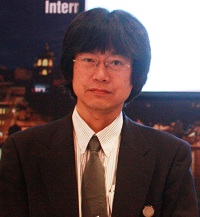
Prof. Dr. Kazuaki Maeda,
Assist. Prof. Dr. Hemantkumar P. Bulsara

Prof. Dr. Haiu Aurelia
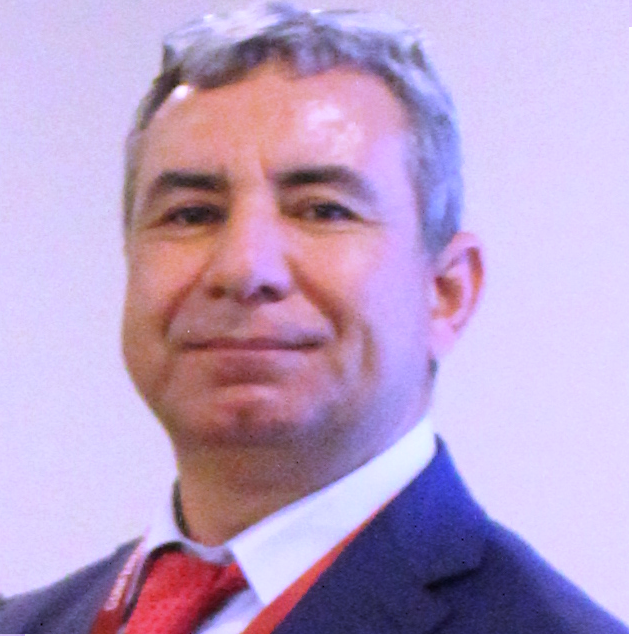
Prof. Dr. Bulent TOPCUOGLU

Prof.(Dr.) Rajesh Singh Tomar
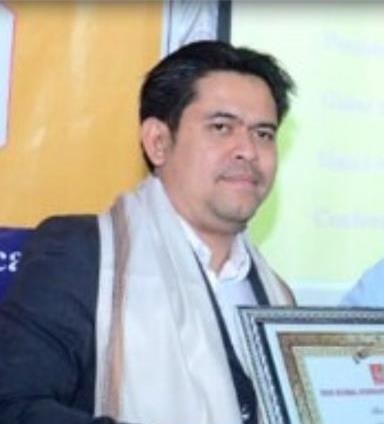
Tosaporn Mahamud.,Ph.D